Add to Calendar
10/01/2027 9:00 AM10/02/2027 5:00 PMSouth Sub-Sahara AfricaDigiMarCon Sub-Sahara Africa 2026 - Digital Marketing, Media and Advertising Conference
DigiMarCon Sub-Sahara Africa 2026 is your chance to ...
- Hear from the most audacious and provocative speakers in the digital marketing industry.
- Gain insight into emerging strategies, the latest innovative technologies, and best practices.
- Network with thought leaders, build your network and collaborate with your peers.
DigiMarCon Sub-Sahara Africa 2026 Digital Marketing, Media and Advertising Conference will be held from October 1st to 2nd, 2026 at the luxurious Hyatt Regency in Johannesburg, South Sub-Sahara Africa. Whether your goal is to reinforce customer loyalty, improve lead generation, increase sales, or drive stronger consumer engagement, the DigiMarCon Sub-Sahara Africa 2026 program has been specifically designed to help attendees develop their audience.
Immerse yourself in topics such as digital strategy, programmatic advertising, web experience management, usability / design, mobile marketing & retargeting, customer engagement, user acquisition, social media marketing, targeting & optimization, video marketing, data science & big data, web analytics & A/B testing, email marketing, content marketing, conversion rate optimization, search engine optimization, paid search marketing, geo-targeting, predictive analysis & attribution, growth hacking, conversion rate optimization, growth marketing tools, marketing & sales automation, sustainable growth strategies, product marketing & UX / UI and much, much more!
DigiMarCon Sub-Sahara Africa 2026 offers all of the elements you need to achieve digital marketing success! Conventional thought will be challenged, new ways of thinking will emerge, and you will leave with your head and notebook full of action items and ideas to lead your agency / team / account to even greater success.
Come to DigiMarCon Sub-Sahara Africa 2026 and discover how to thrive as a marketer in a world where everything is digital.
Take advantage of our super saver registration rates and secure your seat early.
For more details visit https://digimarconsubsaharaafrica.com/
Hyatt Regency Johannesburg, 191 Oxford Rd, Johannesburg, Sub-Sahara Africa
Powerful linemen utilize the bull rush to dominate opponents and control the line of scrimmage
The world of American football is built on physicality and strategic prowess, and few displays of power are as impactful as the bull rush. This offensive maneuver, executed by offensive linemen, isn't simply about brute force, although that certainly plays a role. It’s a calculated technique designed to overwhelm a defensive opponent, clearing the path for the running back or giving the quarterback the time needed to deliver a precise pass. Understanding the nuances of a successful bull rush requires looking beyond raw strength; it’s about leverage, timing, and relentless effort. It's a core skill that separates good linemen from truly dominant ones, and a spectacle that excites fans and terrifies opposing defenses.
The effectiveness of the bull rush isn't solely reliant on the size of the offensive lineman. While larger players certainly possess an advantage, technique and conditioning are equally important. A lineman who consistently employs proper footwork, maintains a low center of gravity, and understands how to transfer their weight effectively can often overcome a more physically imposing defender. The aim isn’t to simply collide head-on, but to drive through the opponent, disrupting their balance and forcing them backward. The modern game has evolved, and the bull rush continues to be a vital component in both run and pass protection schemes, demanding constant refinement and adaptation from players at all levels.
Fundamentals of Offensive Line Play and the Bull Rush
Successful offensive line play is a complex interplay of individual skill and cohesive teamwork. Linemen must be able to execute a variety of blocks, reacting to defensive formations and adjusting their technique on the fly. This includes pass blocking, run blocking, and the more aggressive techniques like the bull rush. The core principle behind all effective blocking is establishing a strong base and maintaining leverage. A low center of gravity allows a lineman to generate more power and resist being moved by a stronger opponent. Proper hand placement is also critical; linemen aim to deliver forceful blocks with their hands inside the defender’s frame, controlling their movement. Furthermore, consistent practice and repetition are vital to building muscle memory and ensuring that these techniques become instinctive during the heat of a game. The ability to read the defensive alignment and communicate with teammates is what truly separates a solid offensive line from an elite one.
[adrotate banner="12"]
The bull rush itself is a specialized technique within this broader skillset. It's generally employed when a lineman believes they have a significant advantage in strength and can overpower their opponent. It's not a technique to be used indiscriminately, as it can leave the lineman vulnerable to counter-moves if executed poorly. The initial steps of a bull rush involve a quick, explosive movement forward, aiming to disrupt the defender’s balance. This is followed by a forceful drive with the hands, attempting to lock onto the defender’s chest and drive them backward. The key is to maintain a low center of gravity throughout the entire process, continually driving the feet and legs to generate maximum power. The goal is to create movement and displace the defender, opening a lane for the running back or providing time for the quarterback.
Technique
Key Elements
Stance
Low center of gravity, weight balanced, feet shoulder-width apart.
Initial Step
Explosive forward movement, targeting the defender's chest.
Hand Placement
Inside the defender's frame, locking out arms.
Footwork
Continuous drive with the legs, maintaining a strong base.
Understanding the nuances of these elements is what separates a merely forceful push from a devastating bull rush. It’s a technique refined through countless hours of practice, film study, and physical conditioning.
Developing Strength and Conditioning for the Bull Rush
The bull rush is undeniably a strength-based maneuver, but it's not solely about having the biggest muscles. While overall strength is important, it’s the development of functional strength, power, and explosive athleticism that truly translates to success on the field. Offensive linemen engage in rigorous training regimens that focus on building lower body strength, specifically targeting the legs, hips, and core. Exercises such as squats, deadlifts, and lunges are foundational to building a strong base capable of generating the necessary power for a successful bull rush. Beyond that, plyometric exercises, like box jumps and jump squats, are crucial for developing explosive power and improving the rate at which a lineman can generate force.
Furthermore, core strength is often underestimated but it’s absolutely vital for maintaining balance, stability, and transferring power efficiently. A strong core acts as a bridge between the upper and lower body, allowing for optimal force transmission during the bull rush. Training programs typically include exercises like planks, Russian twists, and medicine ball throws. Finally, conditioning plays a significant role, as linemen need to maintain their strength and power throughout the duration of a game. High-intensity interval training (HIIT) and circuit training can help improve cardiovascular endurance and muscular stamina, allowing them to consistently execute the bull rush without experiencing significant fatigue. The ultimate aim is to build a body that is both incredibly strong and explosively powerful.
Focus on compound exercises like squats, deadlifts, and bench press.
Incorporate plyometric exercises to enhance explosive power.
Prioritize core strength training for stability and power transfer.
Implement HIIT training for improved cardiovascular endurance.
Maintain a strict diet to support muscle growth and recovery.
These elements work in synergy to create a lineman capable of consistently executing a powerful and effective bull rush.
Reading Defensive Alignments and Timing the Bull Rush
The most powerful bull rush isn’t simply a blind charge; it’s a calculated move predicated on reading the defensive line and identifying favorable matchups. Linemen spend countless hours studying film, analyzing opposing defensive tactics, and recognizing tendencies. This preparation allows them to anticipate the defender’s first step and react accordingly. Identifying a defender who is overly aggressive, leaning forward, or has a slightly off-balance stance presents an ideal opportunity for a bull rush. The goal is to exploit these weaknesses and disrupt their momentum. Furthermore, understanding the defensive scheme as a whole is critical. Knowing whether the defense is likely to blitz or drop into coverage informs the lineman’s decision-making process, influencing whether a bull rush is the appropriate technique to employ.
[adrotate banner="12"]
Timing is also paramount. Initiating the bull rush too early can allow the defender to react and counter the move, while waiting too long can negate the element of surprise. The ideal timing is often synchronized with the snap of the ball, allowing the lineman to capitalize on the defender’s initial movement and take them off balance. Experienced linemen develop an almost instinctive sense of timing, honed through repetition and game experience. They can anticipate the defender's reactions and adjust their technique accordingly. The best offensive linemen don't just react to the defense; they proactively anticipate their movements and dictate the line of scrimmage. This is a skill developed through consistent practice and a deep understanding of the game.
Study film to identify the defender's tendencies.
Look for imbalances or aggressive leanings.
Time the bull rush with the snap of the ball.
Be prepared to adjust based on the defender's reaction.
Maintain a strong base and avoid overextending.
These strategies empower a lineman to move beyond simple force and deliver a strategically timed and expertly executed bull rush.
Variations and Counter-Moves to the Bull Rush
While the fundamental principles of the bull rush remain consistent, there are variations in technique that linemen can employ to adapt to different opponents and situations. One common variation involves utilizing a "rip" move, where the lineman subtly adjusts their hand placement to create leverage and pull the defender off balance. Another technique involves using a slight swim move to disengage the defender’s hands, creating an opening for a more powerful drive. However, a truly skilled lineman doesn't simply rely on a single technique. They are adept at mixing up their approach, keeping the defense guessing, and preventing them from establishing a consistent read on their blocking patterns.
It’s equally important to understand how defenders attempt to counter the bull rush. Common defensive strategies include using a “bull rush counter,” where the defender attempts to anchor their feet and absorb the impact, preventing being driven backward. Others utilize a swim move to redirect the lineman's force, or employ a rip move to disengage their hands. Linemen must be prepared for these counter-moves and have the agility and technique to react accordingly. This often involves adjusting their hand placement, changing their body position, and maintaining a low center of gravity to resist being moved. The constant back-and-forth between offensive and defensive techniques makes the line of scrimmage a dynamic and intensely competitive battleground.
The Evolution of the Bull Rush in Modern Football
The game of football is constantly evolving, and the bull rush is no exception. While the core principles remain relevant, modern linemen are incorporating new techniques and strategies to enhance their effectiveness. Increased emphasis on athleticism and agility has led to a more dynamic style of bull rushing, where linemen are less reliant on sheer size and more focused on utilizing their speed and power to disrupt the defense. Furthermore, advancements in strength and conditioning have allowed linemen to maintain their strength and explosiveness throughout the duration of a game, leading to more consistent and impactful bull rushes. The integration of advanced analytics and film study has also played a role, allowing linemen to identify subtle defensive tendencies and anticipate opponent’s movements with greater accuracy.
We're also seeing a greater emphasis on collaborative blocking schemes, where multiple linemen work together to execute a coordinated bull rush, overwhelming the defense with sheer force. This is particularly effective against teams that rely on individual pass rushers. Ultimately, the future of the bull rush lies in the ability to blend traditional techniques with modern athleticism and strategic thinking. Linemen who can adapt to the evolving game and consistently refine their technique will continue to dominate the line of scrimmage and shape the outcome of games. The continued refinement of this fundamental technique promises to remain a pivotal element of offensive success.
GET YOUR FREE DIGIMARCON BROCHURE AND NEVER MISS AN UPDATE
Sign up for email updates and get your the FREE DigiMarCon Subsahara Africa brochure and stay in the know about all things DigiMarCon including price changes, discounts, and the latest speakers added to the schedule.
Business and marketing professionals have a lot of choice in events to attend. As the Premier Digital Marketing, Media and Advertising Conference & Exhibition Series worldwide see why DigiMarCon stands out above the rest in the marketing industry and why delegates keep returning year after year
Global Event Series
DigiMarCon is the Largest Digital Marketing, Media and Advertising Conference & Exhibition series in the world, with annual events held in all continents (North America, Latin America, Europe, UK, Asia Pacific, Middle East and Africa) in 13 countries (United States, Canada, Australia, New Zealand, United Kingdom, Ireland, Netherlands, Spain, Brazil, Singapore, India, United Arab Emirates and South Africa), across 33 cities (New York, Philadelphia, Boston, Toronto, Vancouver, Montreal, Houston, Dallas, Chicago, Los Angeles, San Francisco, Seattle, Washington DC, New Orleans, Atlanta, Detroit, Miami, Denver, San Diego, Phoenix, Las Vegas, Honolulu, London, Dublin, Amsterdam, Barcelona, Johannesburg, Cape Town, Dubai, Sydney, Auckland, Singapore and Sao Paulo). All DigiMarCon Events can be attended in-person or online. Wherever you are located there is a regional DigiMarCon event nearby you can attend.
5-Star Luxury Event Venues
DigiMarCon Conferences are held in top luxury 5-star event venues across the world such as; Royal Caribbean Cruise Ships, Olympic Stadiums, Marina Bay Sands Expo & Convention Centre and Wynn, JW Marriott, Marriott Marquis, Hyatt Regency, InterContinental, The Westin, Renaissance, Hilton, Conrad, W, Sheraton, Loews and Sofitel Hotel properties. Discount hotel room rates at each venue hotel means no hassle getting to and from the venue each day.
Extensive & Memorable Networking Experiences
Building relationships matter! At DigiMarCon Conferences we have more networking breaks on our program than others. On average there are 8 Networking breaks at each event giving delegates ample opportunities in a relaxed atmosphere to meet others over the 2-days at the event; from 1-hour round table networking luncheons to 3-hour dinner receptions. These networking breaks are set in picturesque locations to facilitate memorable experiences while fostering new relationships. Such experiences include enjoying cocktails and the Sunset over the Pacific Ocean on a private Ocean Terrace in Santa Monica, to being on the Sydney Olympic Stadium playing arena at night enjoying cocktails under the lights, to dining at the 360 Revolving Restaurant at the top of the CN Tower in Toronto for a Dinner Reception, enjoying cocktails on a private promenade overlooking Times Square in New York City, or having fun at the Dazzles Night Club onboard the Royal Caribbean Oasis of the Seas for a Farewell Party, etc.
Industry Thought Leaders from Leading Brands
DigiMarCon Keynotes, Panels and Master Classes are facilitated by the foremost thought leaders in the industry, from celebrity social media influencers to CMO’s from the largest Fortune 500 company brands that are disrupting the digital marketing, media and advertising industry, such as Google, Facebook, Microsoft, Amazon, Oracle, Adobe, eBay, Netflix and more. All presentations are pitch-free, and include actionable takeaways, case studies, strategies and tactics, ready to be applied when back in the office.
Premium Comfortable Meeting Spaces
At DigiMarCon Conferences you are never ‘left in the dark’…. literally, in a large room far away from the stage and speakers, crushed in tight theater seating, without even a table, while sitting in the dark. At DigiMarCon all delegates have premium meeting space in luxurious ballroom well-lit spaces, with comfortable seating with table enabling delegates to use their laptop to take notes with ample charging facilities onsite in a comfortable space to learn and thrive. All tables are situated close with direct view of the stage.
Value for Money & Generous Discounts
DigiMarCon Conferences are affordable to attend, from single-day event passes up to two-day VIP options at a fraction of the cost of other industry events. We offer significant discounts for early bird registrations. Additionally, on top of time-limited discount pass rates, because budgets are tight, we want to make sure all groups have a chance to attend DigiMarCon. For government employees, students, academic, startups, non-profit organizations and teams, we offer generous discounts off the prevailing registration price.
Collaborative Learning & Audience Participation
Attend DigiMarCon and you become part of the show! DigiMarCon Conferences tap into the talent of the room, drawing from the knowledge and experience of the professionals in the audience. All DigiMarCon events include regular interactive question and answer sessions with speakers and the audience ideal for collaboration, audience polls, along with ice-breaker and group exercises, steered by charismatic Emcees.
Meet the Speakers in Person
DigiMarCon Conferences put you right up and close with the speakers giving you the opportunity to meet these social media influencers which you follow in person. Speakers are never hidden in private speaker rooms away from the audience, they are in the auditorium sitting right beside you and participating.
Exceptional Customer Service
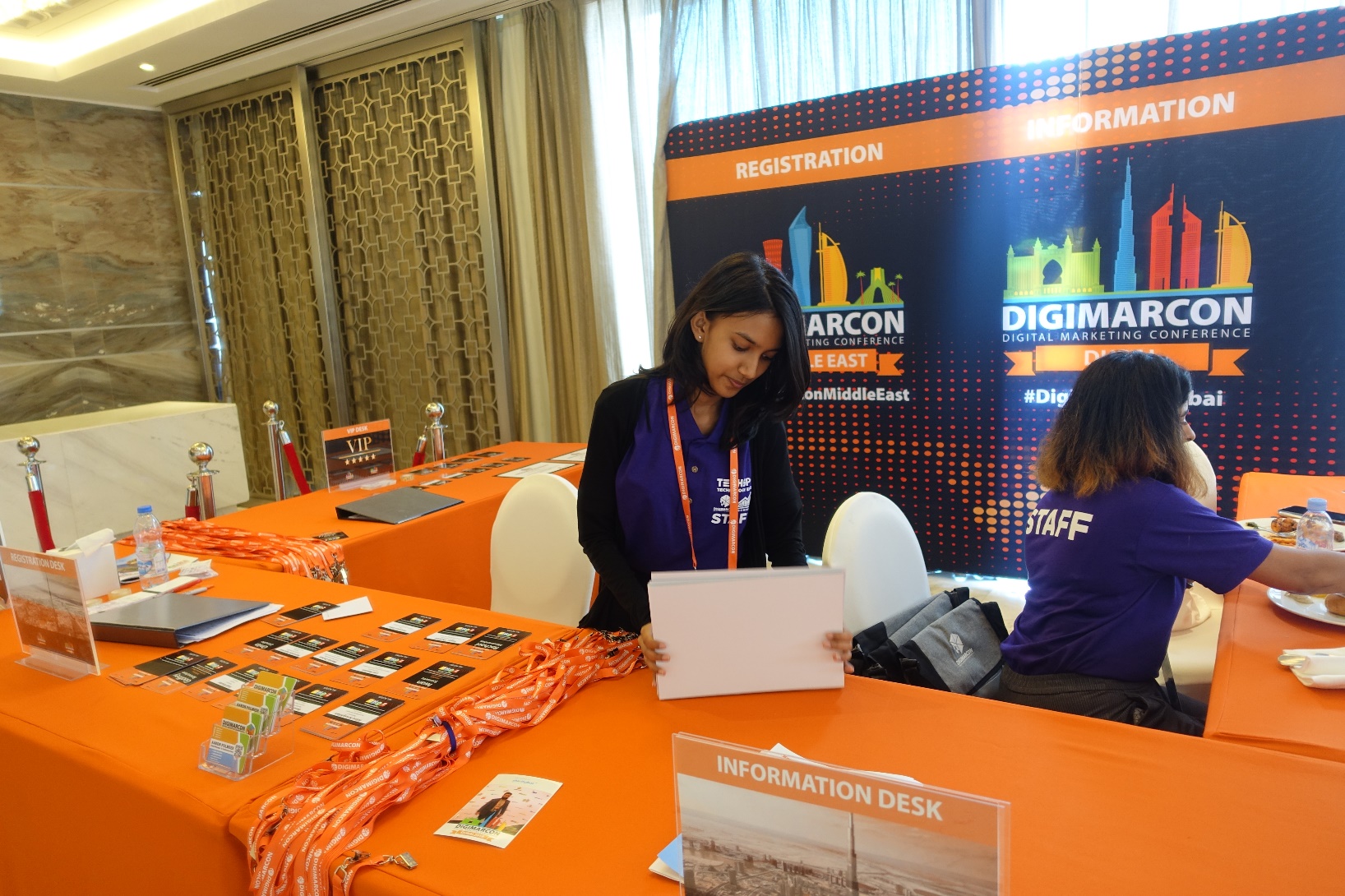
Attending a conference is a well-researched decision. There are many factors to consider such as location, time, venue, cost, speakers, content, etc. At DigiMarCon our results-obsessed Customer Service team are at your service before, during and after the event to help with your needs. It’s at the core of what we do — it drives our business. Offsite, we are ready to assist you via phone, ticket or chat. Onsite at our Conferences, friendly DigiMarCon staff serve as your hosts. They welcome your input and are happy to assist you.
TECHSPO Technology Expo
At all DigiMarCon Conferences is the co-located exclusive event TECHSPO Technology Expo, which showcases the new generation of technology and innovation, including; AdTech, MarTech, Internet, Mobile and SaaS technologies. Be inspired, amazed and educated on how these evolving technologies will impact your business for the better. Unlimited Access to TECHSPO Technology Expo is included with all DigiMarCon passes.
On Demand Library Access
DigiMarCon All Access & VIP Passes include a 12-month on demand access to hundreds of hours of DigiMarCon speaker keynotes, panels and master class presentations from recent DigiMarCon Conferences, including videos, slide decks and key takeaways, available on demand so you can watch what you want, when you want.
The Largest Digital Marketing, Media & Advertising Community
Attendees of DigiMarcon Conferences gain membership to an exclusive global Digital Marketing, Media and Advertising Community of over 500,000 worldwide subscribers to our award-winning digital marketing blog and over 100,000 members to the International Association of Digital Marketing Professionals (visit https://iadmp.org). This global community comprises of innovators, senior marketers and branders, entrepreneurs, digital executives and professionals, web & mobile strategists, designers and web project managers, business leaders, business developers, agency executives and their teams and anyone else who operates in the digital community who leverage digital, mobile, and social media marketing. We provide updates to the latest whitepapers and industry reports to keep you updated on trends, innovation and best practice digital marketing.
Safe, Clean & Hygienic Event Environment
The events industry has forever changed in a world affected by COVID-19. The health and safety of our guests, staff and community is our highest priority and paramount. The team at DigiMarCon is dedicated to ensuring a great experience at our in-person events, and that includes providing a safe, clean and hygienic environment for our delegates.
Some of the key areas we have implemented safe and hygienic measures include;
Limiting Venue Capacities to allow for Social Distancing
Health and Safety Protocols
Safe Food and Beverages and Food-handling
Sanitation Stations with Hand Sanitizer and Wet Wipes Dispensers
Sanitation and Disinfection of Common and High-Traffic Areas
Physical Distancing Measures Between Attendees
Social Distancing Room and Seating Configurations
Non-Contact Thermal Temperature Scanning
Hybrid Events: Attend In-Person or Online
DigiMarCon has always been industry leaders of the Hybrid Event experience for years (a hybrid event combines a "live" in-person event with a "virtual" online component), no one needs to miss out on attending our events. Each DigiMarCon Conference can be attended in-person (with a Main Conference, All Access or VIP Pass) or online (with a Virtual Pass) giving attendees a choice for the experience they want to have. Attending virtually by viewing a Live Stream or On Demand enables participation by people who might be unable to attend physically due to travel or time zone constraints or through a wish to reduce the carbon footprint of the event. If you would like to meet the speakers, network with fellow marketing professionals at refreshment breaks, luncheons and evening receptions, check out the latest Internet, Mobile, AdTech, MarTech and SaaS technologies providers exhibiting then it is highly recommended to attend DigiMarCon in-person. As the largest Digital Marketing, Media and Advertising Conference series with events in 33 international cities worldwide, across 13 countries, there is bound to be a DigiMarCon Event near you to attend in-person if you can.
High-Profile Audience From Leading Brands
DigiMarCon Conference Series is the annual gathering of the most powerful brands and senior agency executives in your region. The Sharpest Minds And The Most Influential Decision Makers - Together for Two Days.
Who Attends Our Conferences
Brands • Agencies • Solution & Service Providers • Media Owners • Publishers • Entrepreneurs • Start-Ups • Investors • Government • Corporates • Institutes of Higher Learning
 Event Starts in:


















No comments